Language

Terms, Truth, Sun Sparrows: A Very Important Lesson from My Father

by Joe Weil March 1, 2011 Academia

I received a very important lesson from my father. We were driving around in the part of New Jersey he grew up in–a once rural area called Chester that was now suburban. He was sad because the street he had lived on so many years before was much smaller in reality than in memory and [...]

Read More
0 comments Read the full article →

A Language Poet You’ll Enjoy Reading

by Brooks Lampe January 7, 2011 Language

Add to the list of great American poets that nobody is talking about. He has been writing quietly for over four decades and gained prominence among the Language school poets. is another masterful accomplishment that further explores his unique form. Since the 1980s, he has been composing copious amounts of syntactically-innovative poetry. It might appear, [...]

Read More
11 comments Read the full article →

The other thing grammar is good for

by Daniel Silliman January 1, 2011 Language
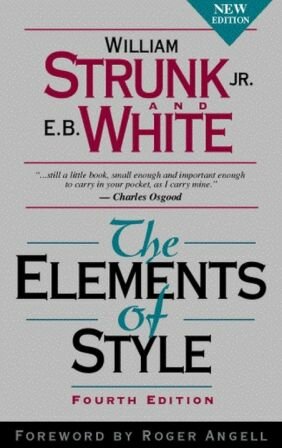
What’s Your Style Book of Choice?

Grammar didn’t come natural to me. The first time, when I learned there was such a thing as grammar, when we were introduced — like, “Daniel, meet grammar,” “Grammar, Daniel” — things did not go smoothly. It was more like sliding bare-bottomed down a sandpaper hill. I was in first grade, and we had “writing [...]

Read More
0 comments Read the full article →

Aesthete and Propagandist: An Interview with Gene Tanta

by Brooks Lampe December 10, 2010 Aesthetics

In the introduction to you refer to your poems as “ghost sonnets.” Why “ghost sonnets?” And what prompted you to (a) select a definitive form, the sonnet, in which to write the poems and (b) to shave a line off the form? I call them “ghost sonnets” because they’re missing the 14th line of a [...]

Read More
5 comments Read the full article →

Gatekeepers of Literary Greatness

by Joe Weil December 8, 2010 Academia

I am excited about the prospect of teaching a course in which students will be given an opportunity to dismantle certain suppositions, while at the same time studying the mechanisms of dismantling which we call literary movements, and literary greatness. First, what is a gatekeeper? What gate does he keep? And what is the literary [...]

Read More
9 comments Read the full article →

‘Those are not the words’: Walt Whitman’s collapsing taxonomy of poetry

by Daniel Silliman December 7, 2010 Language

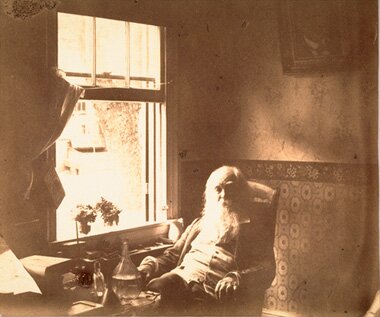
This anxiety Walt Whitman has about poetry emerges in the poem “Song of Myself,” as Whitman seeks to establish a taxonomy of poetry, a system classifying what is good poetry, what bad, but the structure he establishes keeps collapsing. The poem is one Whitman’s fullest explanation of his theory of language and poetry, perhaps even [...]

Read More
0 comments Read the full article →

Translation is Treason

by Stewart K. Lundy November 17, 2010 Header

Entering a new language is entering a new world. But what does it mean to be “in” a world? The word “in” originally had no spatial connotations. To say that someone was “in” something meant that they existed “in anger” or “in love.” Love and anger are not places, but modes of being. But this [...]

Read More
3 comments Read the full article →

Translation, Film, and the ESL Student

by Micah Towery November 11, 2010 Film and TV

There’s been a bit of back and forth about questions of translatability ( and ), and I thought it was worth some observations. I have mentioned this before on the blog, but for those who do not know, I teach upper level ESL to students who plan on entering graduate school in North America. It’s [...]

Read More
5 comments Read the full article →

A Ghost (Sonnet) in Gene Tanta’s “Unusual Woods”

by Brooks Lampe November 8, 2010 Header

Last time, we saw that in his critical introduction to , Gene Tanta wants us to approach his poetry both as immigrant poetry (which means a couple of things) and for its aesthetic value. I postulated that he accomplishes a dialectic between “local” and “universal” through strategies that extend and enrich Deep Image and surrealist [...]

Read More
1 comments Read the full article →

Metaphor as Foundation of Consciousness

by Joe Weil November 1, 2010 Header
Derangement: Breton and Metaphor

This entry is part of a series, Joe Weil on Metaphor» In my next several posts, I am going to talk about metaphors and the invisible neutrino of “and” that lies beneath them. I will make the following contentions: 1. Metaphors are as much about disassociation as association 2. Metaphors generate subtexts. 3. Consciousness and [...]

Read More
0 comments Read the full article →

“Fractured at a Touch:” More on Abstract and Concrete

by Joe Weil November 1, 2010 Language
A Thing with Feathers: Concrete and Abstract

This entry is part of a series, Joe Weil on Metaphor» I am reading Rosanna Warren’s book, Departures, and liking it a great deal, and, since I find her poems especially keen on using the entire spectrum of poetic concreteness between representational abstraction and non-representational abstraction. I’ll use her “Portrait: Marriage” as a grounding for [...]

Read More
0 comments Read the full article →

A Beautifully Scrambled Egg

by Brooks Lampe October 19, 2010 Aesthetics

In , Mathews lets the loose cohesion of his poems suggest profundities that seem unlikely coming from often mundane subjects. His poems are cohesive because of formal structure and theme, but it is a deliberately incoherent kind of cohesion. The effect is delicate and oblique, and it is growing on me. Mathews likes wandering off [...]

Read More
0 comments Read the full article →

Surrealism Re-Imagined

by Brooks Lampe October 11, 2010 Language

Brooks Lampe reviews Andrew Joron’s What a desperate trance!—The skyboat resembles a flying vulva; the city, the arc of an abandoned soliloquy. Andrew Joron represents a small, almost indistinguishable enclave of contemporary poets who know (and appreciate that) they have been influenced by surrealism. Versus the rest of the contemporary poets who do not know [...]

Read More
2 comments Read the full article →

Anxious yawp

by Daniel Silliman October 11, 2010 Language

There is a specifically poetic shape to the anxieties visible in Walt Whitman’s poetry. Looking at Whitman’s theory of language and how that theory works out in the poems, the shape of the anxiety becomes apparent. He had this Transcendentalist idea of language, detailed by Tyler Hoffman in his essay, by C. Carroll Hollis in [...]

Read More
0 comments Read the full article →

What’s Your Style Book of Choice?

by Micah Towery October 8, 2010 Academia

I’m sure many of you read Stanley Fish’s articles on the topic ? from a year or so ago. I came from the “great tradition” tradition, the Mortimer J. Adler mindset of reading all the great books in the Western canon. I also got my dose of composition advice, much of coming from the slightly [...]

Read More
6 comments Read the full article →
Page 1 of 212